
Shocking Truth About ALS Disease: Powerful Nursing Care Guide That Can Save Lives
In this complete guide, you will learn everything about ALS disease, including its definition, causes, symptoms, diagnostic criteria, treatment, and powerful nursing management strategie
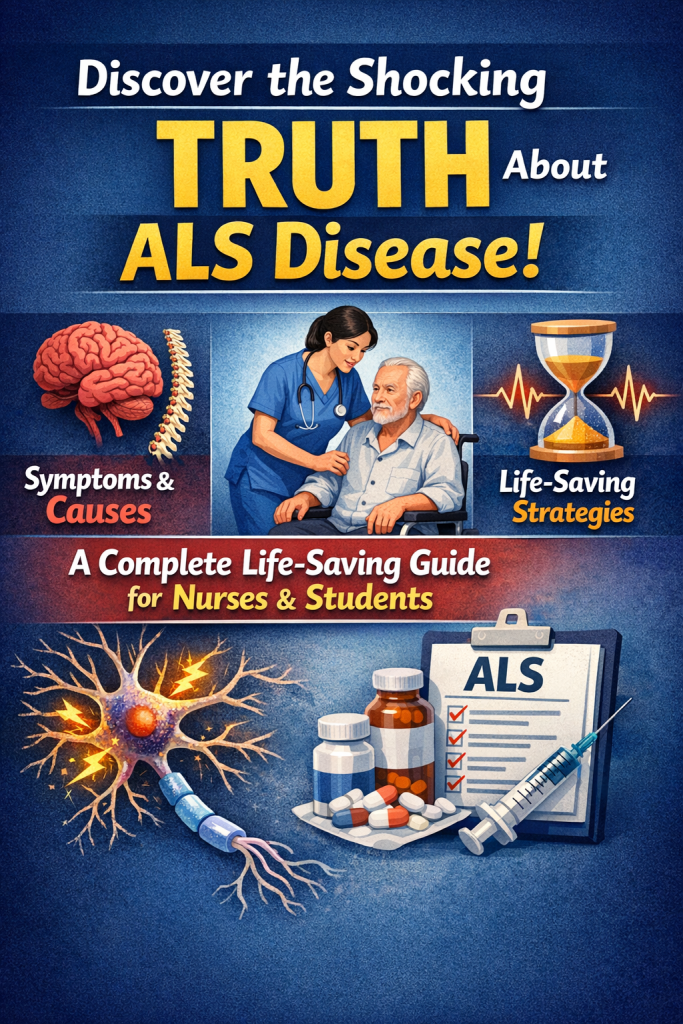
What Is ALS Disease?
ALS disease (Amyotrophic Lateral Sclerosis) is a progressive neurodegenerative disorder that affects motor neurons in the brain and spinal cord. Motor neurons are responsible for controlling voluntary muscle movement such as walking, speaking, swallowing, and breathing.
As ALS disease progresses, motor neurons degenerate and die. When this happens, the brain can no longer send signals to the muscles. Over time, muscles weaken, shrink (atrophy), and lose function.
ALS disease is also commonly known as Lou Gehrig’s disease, named after the famous baseball player who was diagnosed with it.
Types of ALS Disease
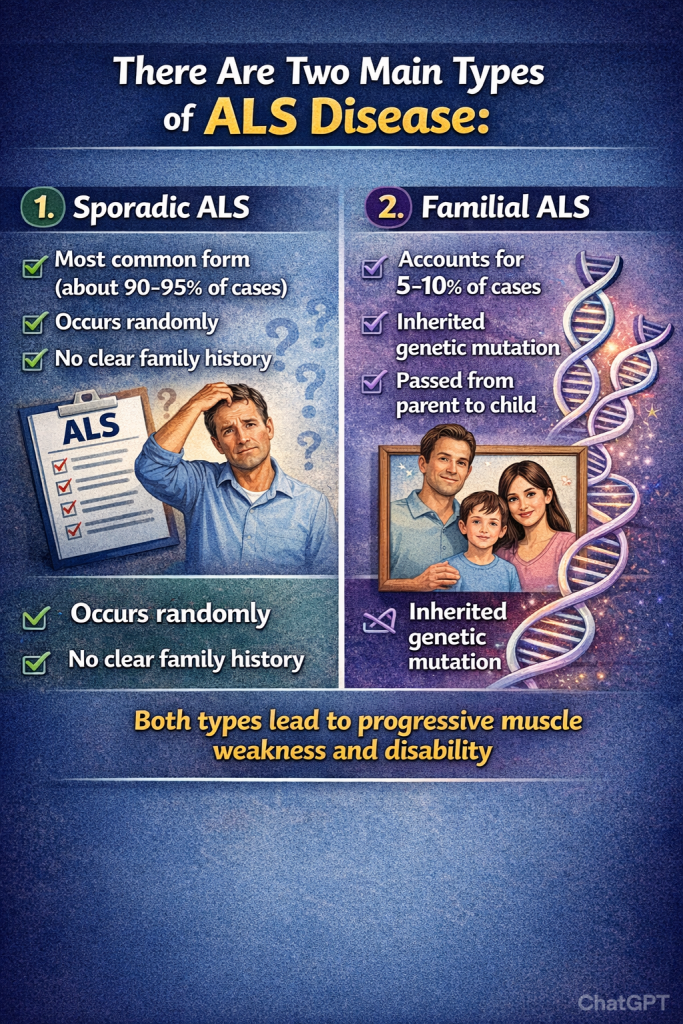
There are two main types of ALS disease:
1. Sporadic ALS
Most common form (about 90–95% of cases)
Occurs randomly
No clear family history
2. Familial ALS
Accounts for 5–10% of cases
Inherited genetic mutation
Passed from parent to child
Both types lead to progressive muscle weakness and disabil
Causes of ALS Disease
The exact cause of ALS disease remains unknown, but several risk factors and possible triggers have been identified:
Genetic mutations (especially in familial ALS)
Environmental toxin exposure
Oxidative stress
Autoimmune mechanisms
Abnormal protein accumulation in neurons
Glutamate toxicity (excess neurotransmitter damaging nerve cells)
Although researchers are making progress, ALS disease still has no definitive cure.
Signs and Symptoms of ALS Disease
Symptoms of ALS disease vary from person to person, depending on which motor neurons are affected first.
Early Symptoms:
Muscle weakness (arms, legs, or hands)
Muscle twitching (fasciculations)
Cramping
Slurred speech
Difficulty swallowing
Fatigue
Progressive Symptoms:
Severe muscle atrophy
Difficulty walking
Loss of coordination
Breathing difficulty
Paralysis
Late Stage Symptoms:
Complete loss of voluntary movement
Respiratory failure
Inability to speak
Importantly, ALS disease does not usually affect intelligence, memory, or senses in early stages.
Diagnostic Criteria for ALS Disease
Diagnosing ALS disease can be challenging because symptoms mimic other neurological conditions.
Diagnostic Tests Include:
Detailed neurological examination
Electromyography (EMG)
Nerve conduction studies
MRI scan
Blood and urine tests
Muscle biopsy (if needed)
The diagnosis is based on clinical findings of upper and lower motor neuron degeneration and progressive symptom spread.
Early diagnosis allows earlier intervention and supportive management.
Stages of ALS Disease Progression
ALS disease progresses gradually through stages:
Stage 1: Early Stage
Mild muscle weakness
Slight speech difficulty
Minimal functional impairment
Stage 2: Middle Stage
Increased muscle weakness
Mobility issues
Need for assistive devices
Stage 3: Late Stage
Severe muscle weakness
Feeding tube may be required
Non-invasive ventilation support
Stage 4: End Stage
Complete paralysis
Respiratory failure
Full-time care needed
Understanding stages helps nurses plan appropriate care.
Medical Treatment for ALS Disease
Although ALS disease has no cure, treatment focuses on slowing progression and improving quality of life.
FDA-Approved Medications:
Riluzole (slows disease progression)
Edaravone (may reduce functional decline)
Supportive Treatments:
Physical therapy
Occupational therapy
Speech therapy
Nutritional support
Respiratory therapy
Assistive devices such as wheelchairs, communication boards, and ventilators are commonly used.
Powerful Nursing Management of ALS Disease
Nursing care plays a critical role in ALS disease management. Compassionate and evidence-based care can significantly improve patient comfort and dignity.
1. Respiratory Care
Respiratory failure is the leading cause of death in ALS disease.
Nursing interventions:
Monitor respiratory rate and oxygen saturation
Encourage deep breathing exercises
Assist with non-invasive ventilation
Teach cough assistance techniques
Monitor for signs of respiratory distress
Early respiratory support can extend survival.
2. Nutritional Support
Difficulty swallowing (dysphagia) increases risk of malnutrition and aspiration.
Nursing interventions:
Provide soft or pureed diet
Encourage small frequent meals
Monitor weight regularly
Educate family about feeding techniques
Assist with PEG tube feeding when required
Adequate nutrition improves strength and immunity.
3. Mobility and Skin Care
Immobility increases risk of pressure ulcers and contractures.
Nursing interventions:
Reposition every 2 hours
Use pressure-relieving mattresses
Perform passive range-of-motion exercises
Maintain proper body alignment
Assess skin daily
Preventive care reduces complications.
4. Communication Support
As speech becomes impaired:
Use communication boards
Introduce eye-tracking devices
Encourage alternative communication methods
Involve speech therapists
Maintaining communication preserves patient dignity.
5. Psychological and Emotional Support
ALS disease causes emotional distress for patients and families.
Nursing care includes:
Provide emotional counseling
Encourage support groups
Educate family members
Address anxiety and depression
Promote hope and coping strategies
Mental health support is as important as physical care.
Complications of ALS Disease
Common complications include:
Respiratory infections
Aspiration pneumonia
Malnutrition
Dehydration
Pressure ulcers
Deep vein thrombosis
Depression
Early nursing intervention prevents severe complications.
Prevention of ALS Disease
Currently, there is no guaranteed prevention for ALS disease. However:
Avoid smoking
Reduce exposure to toxins
Maintain healthy lifestyle
Regular medical checkups
Genetic counseling (for familial ALS)
While prevention is limited, awareness helps early diagnosis.
Role of Nurses in End-of-Life Care
End-of-life care requires sensitivity and ethical consideration.
Nursing responsibilities:
Provide palliative care
Manage pain effectively
Support advanced care planning
Respect patient wishes
Offer family counseling
Comfort and dignity must remain top priorities.
Most patients with ALS disease live 3 to 5 years after diagnosis. However:
Some live 10+ years
Early intervention improves outcomes
Advanced respiratory support extends survival
Each patient’s journey is unique.
Why Nursing Knowledge of ALS Disease Is Critical
For nursing students and professionals, understanding ALS disease is essential because:
It is progressive and life-threatening
Requires multidisciplinary management
Demands emotional resilience
Involves complex ethical decisions
Needs strong communication skills
Well-trained nurses can truly save lives and improve patient comfort.
Frequently Asked Questions (FAQs)
-
1. What are the first symptoms of ALS disease?
Early symptoms include muscle weakness, twitching, slurred speech, and difficulty swallowing.
-
2. Is ALS disease curable?
No, ALS disease has no cure, but treatments can slow progression and improve quality of life.
-
3. How is ALS disease diagnosed?
Through neurological examination, EMG testing, MRI, and clinical evaluation.
-
4. What causes death in ALS disease?
Respiratory failure is the most common cause of death.
Final Thoughts
ALS disease is a devastating neurological disorder that challenges patients, families, and healthcare professionals. While there is no cure yet, powerful nursing care, early intervention, emotional support, and multidisciplinary management can dramatically improve quality of life.
As a nurse or nursing student, your knowledge, compassion, and skills can truly make a life-saving difference in ALS disease care.
At Empower Nursing Skill, we believe education empowers care — and care saves lives.


