AI and Technology in Nursing: A Complete Guide for Modern Healthcare
Introduction
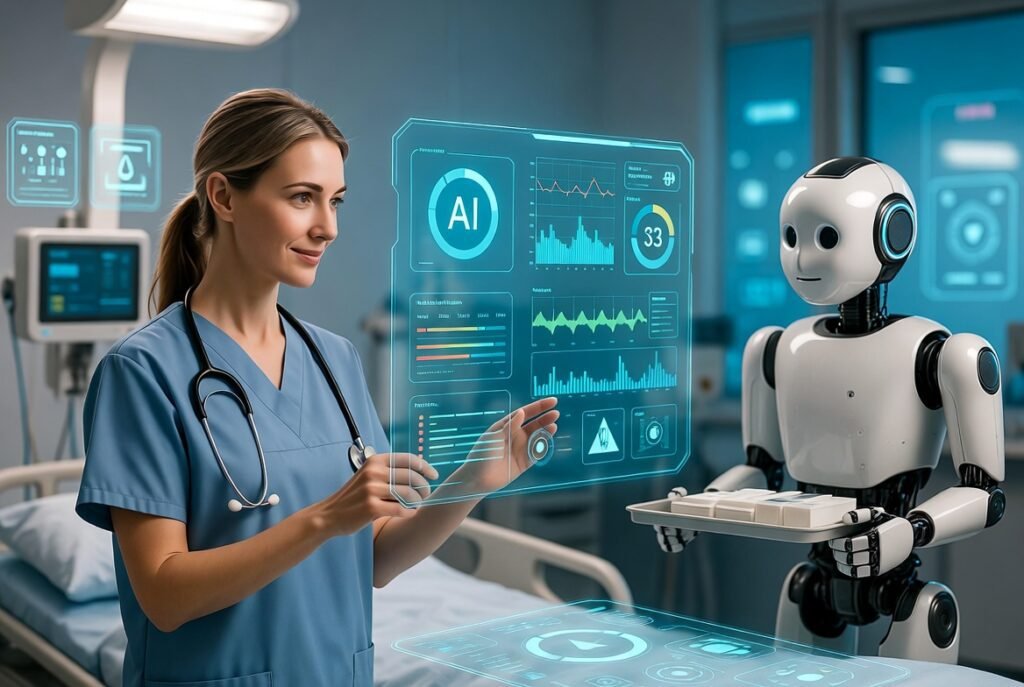
The healthcare industry is evolving rapidly, and one of the most transformative forces behind this change is AI and technology in nursing. From improving patient outcomes to reducing workload, artificial intelligence (AI) and advanced technologies are reshaping how nurses deliver care.
In today’s fast-paced clinical environment, nurses are not just caregivers—they are becoming tech-savvy professionals who use smart systems to make faster, safer, and more accurate decisions.
This article explores how AI and technology in nursing are revolutionizing healthcare, the benefits and challenges, and what the future holds for nursing professionals.
What is AI and Technology in Nursing?
AI and technology in nursing refers to the integration of artificial intelligence, machine learning, robotics, and digital tools into nursing practice to enhance patient care and clinical efficiency.
These technologies include:
- Electronic Health Records (EHRs)
- Clinical Decision Support Systems (CDSS)
- Wearable health devices
- Telehealth platforms
- Robotic assistants
- AI-powered diagnostic tools
Together, they support nurses in providing evidence-based, accurate, and timely care.
Role of AI in Modern Nursing Practice
Artificial intelligence is not replacing nurses—it is empowering them.
Key roles include:
- Clinical decision-making: AI analyzes patient data to suggest diagnoses and treatments
- Early detection: Identifies risks like sepsis or cardiac arrest earlier
- Workflow automation: Reduces documentation burden
- Patient monitoring: Tracks vital signs in real time
- Personalized care: Tailors treatment plans for individual patients
AI helps nurses focus more on patient-centered care rather than administrative tasks.
Types of Technologies Used in Nursing
- Electronic Health Records (EHRs):Digital patient records improve communication and reduce errors.
- Telehealth and Telemedicine:Allows nurses to care for patients remotely, especially in rural areas.
- Wearable Devices:Track heart rate, oxygen levels, and activity.
- Robotics in Nursing:Assist with lifting patients, delivering medications, and performing repetitive tasks.
- Mobile Health Apps:Enable patient education and self-management.
- AI-Powered Diagnostic Tools:Provide faster and more accurate diagnosis support.
Benefits of AI and Technology in Nursing
- Improved Patient Care
AI ensures accurate diagnosis and timely interventions.
- Increased Efficiency
Automation reduces paperwork and saves time.
- Enhanced Patient Safety
Minimizes medication errors and clinical mistakes.
- 4. Better Decision-Making
Data-driven insights support evidence-based practice.
- 5. Reduced Workload
Helps manage nurse burnout by simplifying tasks.
- Real-Time Monitoring
Continuous patient tracking improves outcomes.
Challenges of AI and Technology in Nursing
Despite its advantages, there are some challenges:
- High Cost:Implementing advanced systems can be expensive.
- Lack of Training:Nurses need proper education to use new technologies.
- Data Privacy Concerns:Patient data must be protected from breaches.
- Technical Issues:System failures can disrupt care delivery.
- Resistance to Change:Some healthcare professionals may hesitate to adopt new tools.